
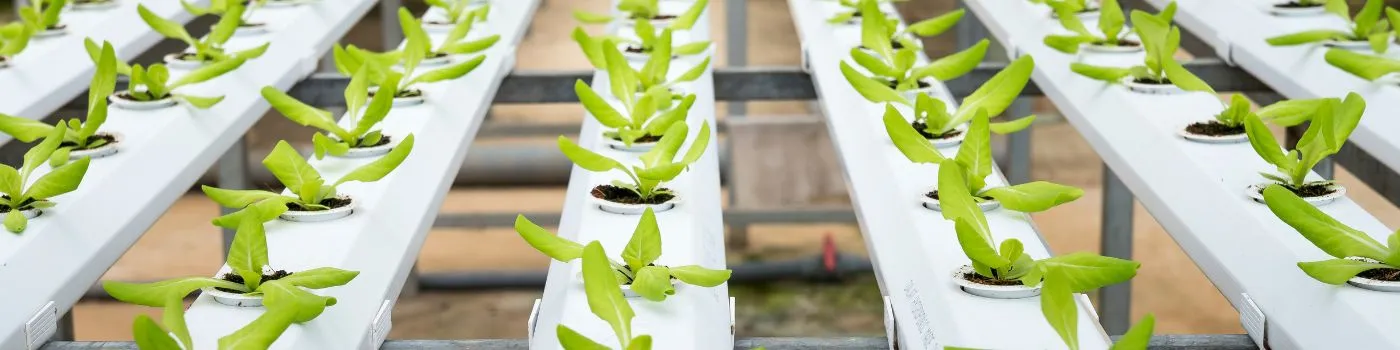
Crop Pest Control in UAE: A Practical Guide for Farmers
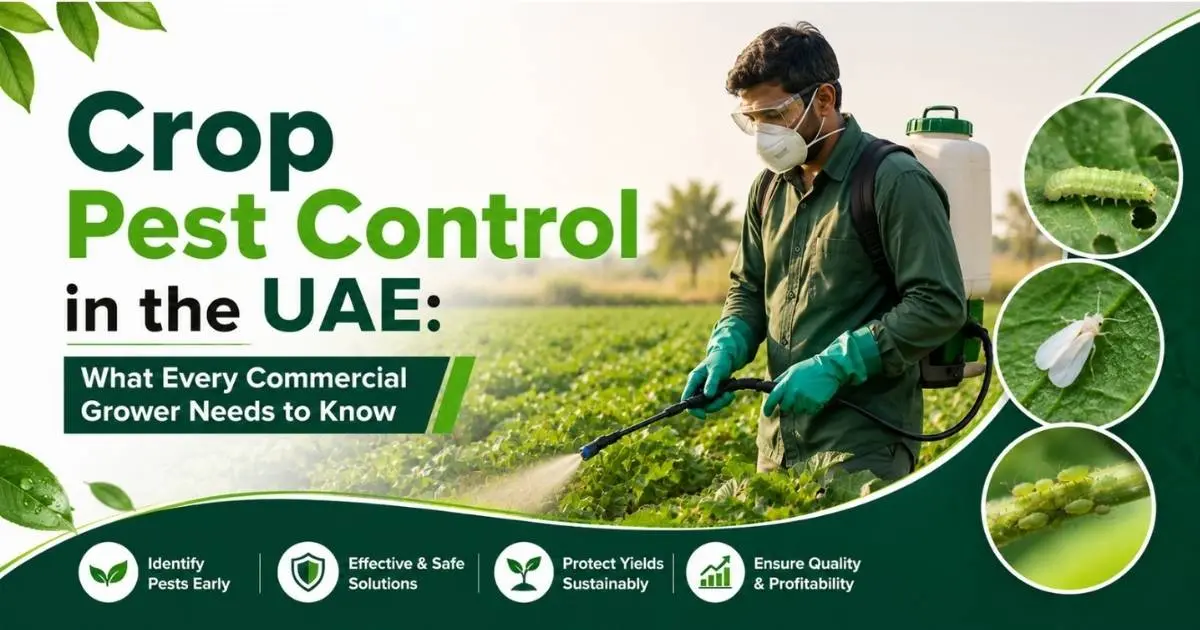
Crop Pest Control in the UAE: What Every Commercial Grower Needs to Know
Crop pest control in the UAE means identifying and managing insects, fungi, and soil pests that reduce yields. Given the UAE's year-round heat and greenhouse-heavy farming, the most effective approach combines early monitoring, bio-pesticides, pheromone traps, and IPM, keeping residues low while meeting international food safety standards.
Pest damage rarely announces itself early. By the time a whitefly colony becomes visible to the naked eye, the population may already number in the thousands, and the window for low-cost intervention has usually closed. For commercial farmers operating in the UAE, that delay carries a real cost.
Crop pest control in the UAE operates under conditions most conventional agronomy manuals were never written for: ambient temperatures above 45°C for months at a stretch, greenhouses that trap both heat and humidity, sandy soils with little natural pest suppression, and year-round cropping cycles that give pests no seasonal break. The result is pest pressure that builds continuously instead of resetting each year.
This guide is written for farm managers, agricultural distributors, and agri-business operators who need practical, evidence-grounded answers. It covers the pests causing the most damage on UAE crops, a comparison of control methods, a step-by-step IPM framework, and field-tested recommendations.
TL;DR - Key Takeaways
- UAE farms face distinct pest pressure: year-round heat, cross-border pest migration, and strict export residue standards.
- Integrated Pest Management (IPM) - monitoring, biological controls, and targeted chemistry together - consistently outperforms single-method programs.
- Bio-pesticides and pheromone traps form the foundation of residue-free crop protection for export-grade produce.
- Acting early costs a fraction of reactive spraying and protects yield more reliably.
- Suraj Shree Chemicals Limited (SSCL) has manufactured NPOP-certified bio-based crop protection inputs, including neem-based and Trichoderma-based formulations, since 1975, and supplies export markets across the region.
Why Crop Pest Control Demands a Different Approach in the UAE
Crop pest control in the UAE requires a climate-specific approach because methods built for temperate regions tend to underperform under sustained extreme heat. Year-round growing cycles mean pest populations never reset. Combined with strict export food-safety standards, UAE farmers need solutions that are both heat-stable and residue-compliant, which is where bio-based and integrated programs earn their place.
Most pest management literature was written with farms in Europe, North America, or temperate Asia in mind. The UAE sits outside that frame. Three structural factors make pest control here harder, and more consequential, than in most other agricultural environments.
No seasonal reset
In temperate climates, winter kills or suppresses many pest populations naturally. UAE farmers do not get that pause. Whitefly, mites, and nematodes cycle continuously across twelve months, compounding on the same land season after season.
Rapid resistance development
Continuous growing means continuous pesticide exposure. Farms leaning heavily on synthetic chemistry often find standard doses losing effectiveness within two to three seasons. Once resistance sets in for a local pest population, the fix is expensive active-ingredient rotation, or abandoning the affected site.
Export residue compliance
UAE produce headed for GCC, EU, or Asian markets has to conform to the Maximum Residue Limits (MRLs) set by the importing country. A single spray applied too close to harvest can get an entire batch rejected at customs, which is exactly the failure mode that bio-based programs are built to prevent.
What most pest control content gets wrong about the UAE
Generic articles recommend standard IPM tools without addressing how heat degrades biological product efficacy, how desalinated irrigation water changes soil microbiome dynamics, or how trans-boundary locust and pest migration events shift outbreak timing. Applying a temperate-climate playbook to UAE farms without adjustment usually produces weaker results than the same playbook run at home.
Key Takeaway
The UAE isn't a hotter version of standard agriculture. Its pest management needs are structurally different, and programs designed for it specifically tend to outperform generic approaches.
The Pests Causing the Most Economic Damage on UAE Farms
The highest-impact crop pests in the UAE include Bemisia tabaci (silverleaf whitefly), Tuta absoluta (tomato leaf miner), Tetranychus urticae (two-spotted spider mite), root-knot nematodes (Meloidogyne spp.), and thrips species. These pests stay active year-round in the local climate and account for most commercial crop losses across greenhouse and open-field operations.
Bemisia tabaci - Silverleaf Whitefly
Whitefly is the most reported economic pest across UAE greenhouse crops. Its damage works on two levels: direct feeding reduces photosynthetic capacity, and honeydew secretion creates a medium for sooty mould. The bigger threat is viral transmission - B. tabaci is the primary vector for Tomato Yellow Leaf Curl Virus (TYLCV), which can render an entire tomato block unmarketable within days of symptom onset. There is no cure once the virus establishes, only prevention through vector control.
Tuta absoluta - Tomato Leaf Miner
Since arriving in the Middle East around 2009, Tuta absoluta has become one of the most destructive insects on tomato, pepper, and potato crops in the UAE. Larvae mine through leaf tissue and bore directly into fruits, which makes chemical contact sprays largely ineffective once infestation takes hold inside plant tissue. Pheromone-based monitoring paired with early biocontrol is currently the most reliable way to manage it.
Tetranychus urticae - Two-Spotted Spider Mite
Spider mites are a direct product of heat stress. UAE summer conditions - low humidity and high temperature - are exactly the environment in which T. urticae populations can double in under a week. Bronze leaf stippling and fine webbing on leaf undersides are the visible signs, but by the time webbing shows up, populations are already in the hundreds of thousands per square metre. Miticide resistance is common on farms running spray-heavy programs.
Meloidogyne spp. - Root-Knot Nematodes
Root-knot nematodes are microscopic soil-dwelling roundworms that penetrate plant roots and form characteristic galls, blocking water and nutrient uptake. The UAE's sandy, low-organic-matter soils offer almost no natural suppression of nematode populations. Unlike foliar pests, nematode damage stays invisible above ground until it's severe, which makes soil sampling a critical step that gets skipped far too often.
Frankliniella occidentalis - Western Flower Thrips
Thrips damage crops both through direct feeding, which creates silvery streaking on leaves and distorted fruit, and through virus transmission, specifically Tomato Spotted Wilt Virus (TSWV). Their small size and habit of hiding within flowers and growing points makes them hard to detect until populations are already doing damage.
Key Takeaway
These five pests account for most commercially significant crop losses across UAE greenhouse and open-field operations. Building a monitoring and management program around these species, by crop type, beats a generic pesticide calendar.
Business Benefits of Getting Crop Pest Control Right
Effective crop pest control improves marketable yield, reduces per-season input costs, opens access to residue-sensitive export markets, slows pesticide resistance, and supports long-term soil health. For commercial UAE growers, a structured pest management program is one of the highest-return agronomic investments available.
1. More Produce Reaches Marketable Grade
Pest damage frequently downgrades produce that survives. Insect feeding scars on cucumbers, mite-induced bronzing on peppers, and leafminer tunnels in tomatoes all push product into lower price brackets, or disqualify it from fresh markets altogether. Rigorous pest management keeps more of the harvest in grade-one condition without needing more planted area.
2. Lower Total Input Expenditure Over Time
Emergency spraying is the most expensive form of pest control. When interventions are reactive, applied after populations have already peaked, effective doses climb, application frequency rises, and residue clearance periods compress harvest windows. Farms running structured monitoring-led programs spend less per intervention because they act earlier, when fewer inputs do the job.
3. Direct Access to Residue-Sensitive Export Markets
EU, UK, and premium Asian buyers apply strict MRL testing on imported fresh produce. Bio-pesticides and pheromone-based tools leave zero or near-zero detectable residues, removing a significant compliance risk. It is a market access question as much as a technical one: UAE farms with residue-free production credentials tend to command stronger buyer relationships and better contract terms.
4. Extended Effectiveness of Every Tool in the Program
Resistance to synthetic insecticides isn't hypothetical on UAE farms; it's documented. Rotating biological and chemical modes of action keeps any single pest population from developing resistance across the whole product toolkit. Preserving the efficacy of every product in the arsenal is a long-term farm asset worth protecting deliberately.
5. Stronger Natural Pest Suppression Season on Season
Broad-spectrum chemical programs eliminate beneficial insects - parasitic wasps, predatory mites, ground beetles - that provide passive pest suppression at no cost. Bio-based programs preserve these populations instead. Over two to three seasons, farms that protect their beneficial insect communities tend to report lower background pest pressure and need fewer interventions to stay under economic thresholds.
Integrated Pest Management in the UAE: How the Framework Actually Works
Integrated Pest Management (IPM) is a structured four-layer approach: prevention through resistant varieties and physical barriers, monitoring via traps and regular scouting, biological control using beneficial organisms and bio-pesticides, and targeted chemical use only when pest populations breach economic thresholds. Adapted for year-round heat, IPM consistently delivers better yield protection at lower total input cost than single-method programs in the UAE.
IPM gets referenced constantly and explained poorly almost as often. It isn't shorthand for 'using fewer chemicals.' It's a decision system that determines which tool to use, when, and at what pest pressure level, which makes every intervention more effective and less wasteful.
The four operational layers of an IPM program for UAE conditions:
- Prevention layer: pest-resistant or tolerant varieties, physical exclusion (50-mesh insect netting for greenhouses), strict sanitation between crop cycles, and soil preparation that reduces nematode carryover.
- Monitoring layer: yellow and blue sticky traps, species-specific pheromone lures, twice-weekly scouting records, and soil nematode sampling at the start of each season. Data from this layer drives every downstream decision.
- Biological layer: Trichoderma-based fungal biocontrol, Bacillus thuringiensis (Bt) products for caterpillar pests, neem-derived formulations for broad-spectrum insect suppression, and predatory mite releases for spider mite control. This layer works best as a preventive or early-intervention measure, not an emergency rescue treatment.
- Chemical layer: synthetic pesticides deployed only when trap counts or scouting data breach pre-defined Economic Thresholds (ETs). Rotate across IRAC mode-of-action groups, and never apply within buffer periods for target export markets.
Key Takeaway
These layers aren't alternatives; they're sequential. Prevention lowers baseline pressure. Monitoring catches problems before they escalate. Biological controls handle early populations cheaply. Chemistry is the last-resort backstop, not the first response.
How to Set Up a Crop Pest Control Program: Step by Step
1. Conduct a Pre-Season Pest Risk Assessment
Before planting, identify the three to five pests most likely to affect each crop you grow. For UAE tomatoes, that list starts with whitefly, Tuta absoluta, and root-knot nematode. Map previous crop history against known pest carryover risks. This assessment is the document that justifies every program decision that follows, and makes it defensible to buyers, auditors, or certification bodies.
2. Install a Monitoring Infrastructure
Deploy yellow sticky traps for flying insects (one per 250–400 m² in greenhouses), blue traps for thrips, and species-specific pheromone lures for priority pests. Record trap counts on a fixed schedule; twice weekly is standard for high-pressure crops. Monitoring isn't optional overhead - it's the only way to tell a building outbreak apart from background noise.
3. Define Economic Thresholds for Your Key Pests
An Economic Threshold (ET) is the population level at which intervention cost is justified by the yield protection it delivers. Generic thresholds are available from regional agricultural extension literature, but the most useful ones are calibrated to your specific crop stage, expected yield value, and control cost. Without a defined ET, intervention timing turns into guesswork.
4. Deploy Biological Controls as Your First Intervention Line
When monitoring data shows a population approaching its ET, bring in biological controls before reaching for chemistry. Trichoderma-based products address soil-borne fungal pathogens and support beneficial microbial communities. Neem-based formulations disrupt insect hormone cycles without leaving detectable residues. Apply in early morning or at dusk to limit UV degradation, which matters more in the UAE's light intensity than in most other growing regions.
5. Apply Targeted Chemistry Only at Threshold Breach
When biological intervention isn't enough and pest levels cross the ET, deploy the appropriate registered chemical. Select active ingredients by IRAC classification and rotate groups with each application. Record the product, dose, application date, and pre-harvest interval in your field records, since this data is required for most export certification audits.
6. Review, Record, and Recalibrate Each Season
At the end of the cycle, review which pests peaked when, which interventions worked, and where the program came up short. A 30-minute retrospective per crop block compounds in value over seasons, turning a generic pest control program into a farm-specific intelligence system.
Key Takeaway
No single method performs well in isolation. The real question isn't which method to use, but which combination, in which sequence, for the current pest pressure. That's exactly what an IPM framework is built to answer.
Expert Tips for Crop Pest Control in UAE Conditions
Tip 1 - Scout at First Light
Insect behaviour shifts across the UAE day. Whiteflies, thrips, and leafminers are most active and most visible in the cool early hours. Scouting at midday in summer, when greenhouse temperatures can pass 50°C, produces artificially low counts as insects shelter in dense canopy or soil. Early morning data is simply more accurate. Build scouting schedules around sunrise, not farm convenience.
Tip 2 - Apply Bio-Pesticides After Sunset
UV degradation is one of the main reasons bio-pesticides underperform in the UAE. Neem oil, Bt preparations, and most Trichoderma formulations break down quickly under direct sunlight, especially during the intense UV months of summer. Evening or pre-dawn applications let active ingredients settle onto plant surfaces and soil before UV exposure begins the next morning. It's a small scheduling change that often improves bio-product efficacy noticeably, though actual gains vary by product and should be checked against the manufacturer's own trial data.
Tip 3 - Rotate Crops by Pest Host Range, Not Just Botanical Family
The standard advice - rotate solanaceous crops with cucurbits - falls short in the UAE because both groups share critical pests, including whitefly and root-knot nematode. A more effective rotation pairs broadleaf vegetables with grass-family cover or forage crops, such as sorghum or pearl millet, which are non-hosts for the most damaging UAE pests. This breaks the pest cycle at the host level instead of just moving the field.
Tip 4 - Treat Irrigation Management as Pest Management
Spider mite populations explode under plant stress, and inconsistent irrigation is the most common source of heat-amplified stress on UAE farms. Drought-stressed plants emit volatile compounds that attract mites and sucking insects. Precision drip irrigation paired with basic soil moisture monitoring is, in practice, one of the most cost-effective indirect pest control tools available, because it addresses the stress signal pests respond to rather than the pests themselves.
Tip 5 - Build a Pest Data Record Before You Need It
Farms with two or more seasons of consistent trap count data can identify predictable pest pressure windows specific to their location, crop type, and microclimate. That turns reactive pest management into predictive pest management, allowing pre-emptive biological deployment before populations build rather than an emergency chemical response after they have. The investment is about ten minutes of record-keeping twice a week, and the return compounds every season the data exists.
How SSCL Supports Pest Management for UAE and Export-Focused Growers
Suraj Shree Chemicals Limited has manufactured green biotechnology solutions for agriculture since 1975, with a significant share of its portfolio NPOP-certified organic. For growers building an IPM program along the lines described above, SSCL's relevant range includes:
- Neem Kawach - a neem-based formulation for broad-spectrum insect suppression, suited to evening application in high-UV conditions.
- Bio-Trico (V) and Bio-Trico (H) - Trichoderma viride and Trichoderma harzianum-based biocontrol products for soil-borne fungal pathogens and root health.
- Traps & Lure range - pheromone lures and trap systems for early monitoring of priority pests such as Tuta absoluta and whitefly.
- NPOP-certified bio-inputs - formulated to support zero-residue and low-residue production for MRL-sensitive export markets, including the GCC, EU, and Asia.
SSCL also works directly with international distributors and agri-businesses on export partnerships, private label, and market-specific formulation support. Growers and distributors evaluating a bio-based pest management program for UAE conditions can reach SSCL's technical team through sscl.in/contact, or review export partnership options at https://www.sscl.in/global
Also Read:
Biostimulant Manufacturer for UAE | SSCL
Frequently Asked Questions: Crop Pest Control in the UAE
What is the most destructive crop pest in UAE greenhouse farming?
Silverleaf whitefly (Bemisia tabaci) is consistently identified as the highest-impact pest across UAE greenhouses. Beyond direct feeding damage, it transmits Tomato Yellow Leaf Curl Virus, a disease with no curative treatment that can destroy an entire tomato crop within weeks of first infection. Managing whitefly populations before they reach virus-transmission thresholds is the top pest control priority for UAE tomato growers.
How does crop pest control differ for the UAE's climate compared to other regions?
UAE agriculture differs from temperate-climate farming in three ways: pest populations stay active year-round with no seasonal suppression, extreme heat degrades many conventional and biological products faster, and strict export MRL requirements make residue-free production a commercial necessity rather than a preference. Programs need to account for all three; standard temperate IPM recommendations, applied unchanged, typically underperform in UAE conditions.
Are bio-pesticides effective enough to replace chemical sprays in UAE conditions?
Bio-pesticides work best as preventive and early-intervention tools rather than emergency rescue treatments. For export crops where MRL compliance matters, they're often the primary pest control method, backed up by targeted chemistry only when populations breach economic thresholds. Their main limitation in UAE conditions is UV-driven degradation, which evening application largely resolves. Used correctly within an IPM framework, bio-pesticides meaningfully reduce how much synthetic chemistry a season needs.
What is an Economic Threshold (ET) and why does it matter?
An Economic Threshold is the pest population density at which the yield damage caused justifies the cost of intervention. Acting below the ET means spending on treatments that don't generate a return. Acting above it means preventable damage has already occurred. ETs vary by crop, pest species, current crop value, and intervention cost, and defining and tracking them is what separates a structured pest management program from calendar-based spraying.
What does a crop pest control program typically cost in UAE agriculture?
Costs vary by crop type, pest pressure, and method mix. Reactive chemical-only programs commonly need 8–14 spray events per season at high doses. Structured IPM programs with biological inputs and monitoring often achieve equivalent or better control in 4–7 interventions. Season spend for IPM-based programs tends to come in lower after the first year of implementation, though the exact margin depends on the farm, so it's worth verifying against your own agronomist's numbers.
How do pheromone traps work for crop pest control?
Pheromone traps use synthetic versions of species-specific chemical signals to attract male insects of a target species. Lured insects get caught on sticky surfaces or drown in liquid traps, removing them from the reproductive cycle. Their main value is monitoring: consistent weekly trap counts show whether a population is building toward its economic threshold before visual symptoms appear. For high-priority pests like Tuta absoluta, pheromone traps are the earliest and most reliable warning system available.
Which crops in the UAE face the highest pest risk?
Tomato, cucumber, and pepper crops in protected greenhouse environments face the highest and most consistent pest pressure, mainly from whitefly, mite, and leafminer species. Date palms across the UAE face red palm weevil risk, which needs specialised pheromone monitoring and preventive trunk injection programs. Root vegetables and other soil-dependent crops carry significant nematode risk in sandy soil profiles. Each crop category needs its own pest priority list and management approach.
Conclusion: The Business Case for Structured Crop Pest Control
Crop pest control in the UAE is, at its core, a business decision. Every unmanaged outbreak means direct revenue loss through yield reduction, grade downgrade, or failed export inspections. Every unnecessary spray means inflated input cost. Measured over a full growing season, the gap between reactive and proactive pest management adds up.
The farms getting the best commercial outcomes in the UAE are rarely the ones spending the most on pesticides. They monitor rigorously, act early, lead with biological tools, and deploy chemistry with precision. That combination, built around an IPM framework designed for local conditions, delivers better yield protection, lower input spend, and stronger market access at the same time.
The tools exist and the science is established. What remains is implementing a program with the discipline and consistency that compounding results require. For agri-businesses and farm managers ready to move from reactive spraying to evidence-led pest management, the starting point is always the same: monitor before you manage.