
Best Dairy Cattle Feed in Kenya for More Milk
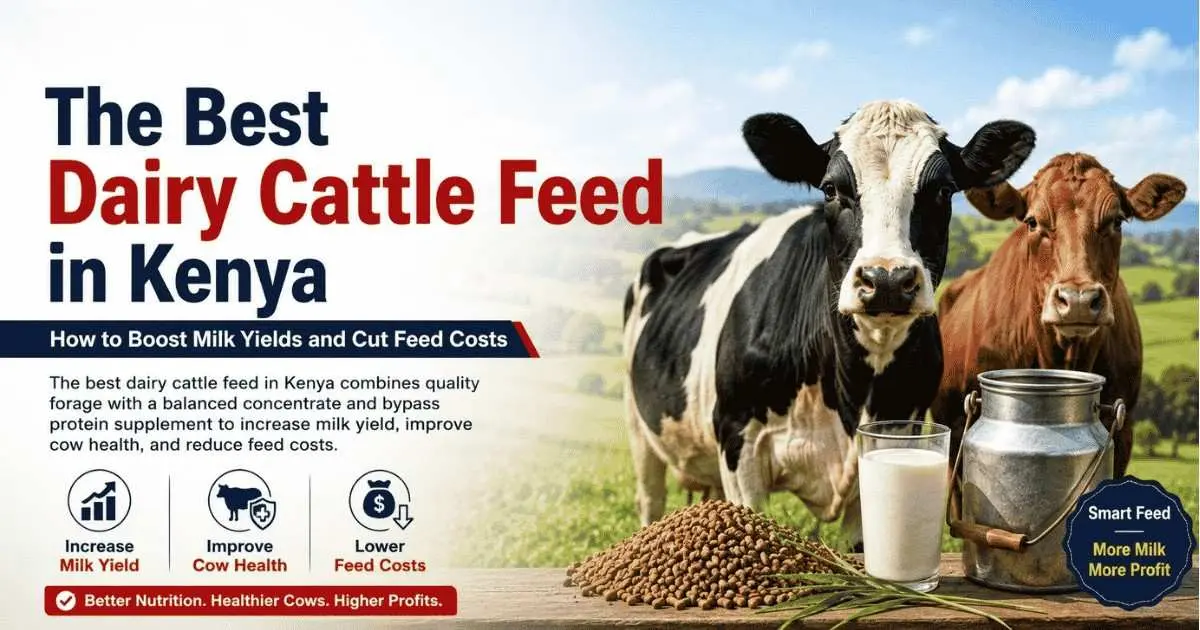
The Best Dairy Cattle Feed in Kenya: How to Boost Milk Yields and Cut Feed Costs
The best dairy cattle feed in Kenya combines quality forage with a balanced concentrate and bypass protein supplement. Products like SUPER, BYPASS, and HYPRO from Suraj Shree Chemicals Limited are formulated to increase daily milk yield, improve cow health, and reduce the feed cost per litre for Kenyan dairy farmers.
Kenya's dairy farmers are losing money - and the biggest reason is poor feed quality.
A Kenya Dairy Board study found that a well-managed small dairy farm can still run at a 16% loss, with feed costs eating 60–70% of total production expenses. That is not a farming problem. That is a feed problem.
If your cows are not eating right, they will not milk right. It does not matter if you have a purebred Friesian or an Ayrshire cross — without the right dairy cattle feed in Kenya that matches your cow's actual nutritional needs, you are leaving money on the table every single day.
This guide covers what your dairy cattle need to eat, why so many Kenyan farmers are not getting it right, and how choosing the right feed products — like SUPER, BYPASS, and HYPRO from Suraj Shree Chemicals Limited — can directly increase your milk output and lower your feed-to-milk cost.
By the end, you will know exactly what to feed, when to feed it, and which products are worth your money in the Kenyan market.
What Does a Dairy Cow in Kenya Actually Need to Eat?
A dairy cow is not eating just to survive. She is eating to produce milk, maintain body condition, support reproduction, and stay healthy - all at the same time.
Kenyan dairy cows need a balanced diet — especially high-producing breeds like Friesians and Ayrshires. That diet must cover four core nutritional areas:
- Energy — Fuels milk production. Comes from digestible starch, sugars, and fibre.
- Protein — Builds muscle and supports milk protein synthesis. Both rumen-degradable and bypass (rumen-undegradable) protein matter.
- Minerals and vitamins — Calcium, phosphorus, magnesium, and vitamins A, D, and E are critical for health and peak lactation.
- Water — Often ignored. A milking cow needs 60–100 litres of clean water per day.
Most smallholder farmers in Kenya rely on Napier grass, hay, or maize stover as a base feed. These forages are important — but they are rarely enough on their own. They are low in protein, low in energy density, and highly variable in quality between seasons.
That is exactly where a quality concentrate feed or supplement closes the gap.
Why Dairy Cattle Feed in Kenya Is a Critical Problem Right Now
Kenya has over 5 million dairy cattle producing an estimated 4 billion litres of milk annually. The sector contributes around 14–17% of agricultural GDP. And yet, most farms are producing far below their genetic potential.
The average smallholder dairy cow in Kenya produces just 4–8 litres per day, while the same breed under proper nutrition can produce 15–30 litres per day in a managed system.
The gap between actual and potential yield is almost entirely a feed gap.
Three core feed problems Kenyan dairy farmers face:
1. Seasonal feed shortage — During dry seasons in counties like Nakuru, Meru, and Nandi, quality fodder becomes scarce and expensive. Farmers scramble for poor-quality hay that cannot support peak milk production.
2. Low feed quality — Much of the locally available hay and maize bran is low in digestible protein and energy. Cows eat it, fill up, and still do not produce well.
3. No bypass protein in the diet — This is what most basic articles miss entirely. Many Kenyan farmers feed only rumen-degradable protein — cheap soya meal or urea-based sources. The problem is that high-producing cows need more protein than the rumen can process and supply. Bypass protein — protein that escapes rumen fermentation and is absorbed directly in the small intestine — is essential for any cow producing above 15 litres per day.
What most articles on dairy cattle feed in Kenya miss: Farmers focus on feed quantity. What they should focus on is protein quality — specifically the balance between rumen-degradable and bypass protein. Correcting this one thing alone can add 4–6 litres per cow per day.
SUPER, BYPASS, and HYPRO: Feed Products Built for High-Producing Dairy Cows
Suraj Shree Chemicals Limited (SSCL) is a research-driven green biotechnology company that has been developing agricultural and animal nutrition solutions since 1975. Their Animal Feed and Nutrition division produces three cattle feed products that are directly relevant to Kenya's dairy sector.
SUPER — The Daily Balanced Concentrate
SUPER is a balanced concentrate feed formulated for active, milk-producing dairy cows. It is designed to work alongside forage — Napier grass, hay, or silage — not to replace it.
In zero-grazing systems across high-dairy counties like Kiambu, Nakuru, and Uasin Gishu, cows fed a quality concentrate like SUPER alongside their daily forage consistently show faster return to peak production after calving and better body condition scores throughout lactation.
Best suited for: Friesian and Ayrshire cows in zero-grazing and semi-intensive systems, mid-lactation through peak production.
BYPASS — Rumen-Undegradable Protein for Peak Lactation
BYPASS directly addresses the biggest hidden feed problem in Kenya's dairy sector — protein deficiency at the intestinal level.
Here is how it works: a dairy cow's rumen breaks down most dietary protein before it can reach the small intestine. But during peak lactation, the cow's protein demand is so high that rumen fermentation simply cannot keep up. Bypass protein — also called Rumen-Undegradable Protein (RUP) — skips the rumen and is absorbed directly in the small intestine.
The result is more amino acids available for milk synthesis, which translates directly to more litres per milking.
Increasing dietary bypass protein during early and peak lactation is one of the most proven strategies for lifting milk yield in high-producing cows — without simply increasing total feed volume.
Best suited for: Cows in early lactation (0–100 days in milk), high-yielders above 20 litres per day, and cows with poor body condition entering lactation.
HYPRO — High-Protein Feed for Demanding Periods
HYPRO is a high-protein, energy-dense feed designed for the periods of peak nutritional demand in a cow's cycle — fresh cows post-calving, pregnant heifers approaching first lactation, and cows recovering from the nutritional stress of Kenya's dry seasons.
Kenya's dry seasons hit cattle hard in counties like Laikipia, Kajiado, and parts of the Rift Valley. Cows lose body condition, drop in milk, and take longer to return to peak yield when the rains return. HYPRO is formulated to accelerate recovery and maintain production through these stress periods.
Best suited for: Transition cows (3 weeks before to 3 weeks after calving), drought recovery feeding programmes, and heifers approaching first calving.
Benefits of Dairy Cattle Feed Done Right in Kenya
1. Higher Milk Yield Per Cow Per Day
Proper nutrition — especially adequate energy and bypass protein — directly increases milk synthesis. In managed zero-grazing systems with quality concentrate supplementation, cows commonly produce 15–25 litres per day versus 5–8 litres on forage alone. More milk per cow means fixed costs — labour, housing, veterinary fees — are spread across more revenue-generating litres.
2. Better Body Condition and Faster Return to Reproduction
Cows that are nutritionally deficient take longer to resume cycling after calving. This extends the calving interval, meaning fewer calves and fewer complete lactation cycles per cow per year. Feeding HYPRO during the transition period helps cows hold body condition, which directly shortens the interval from calving to first oestrus and improves reproductive efficiency across the whole herd.
3. Lower Feed Cost Per Litre of Milk
Cheap, low-quality feed looks like a saving. It is not. If a cow eats 12 kg of poor-quality maize bran and produces 6 litres, your feed cost per litre is high. If the same cow eats 7 kg of a balanced concentrate like SUPER alongside her forage and produces 18 litres, the cost per litre drops significantly. Quality feed is an investment in your milk margin, not an overhead expense.
4. Better Milk Quality — Higher Fat and Protein Content
Processors like KCC and New KCC pay on quality, including fat content. Cows fed adequate bypass protein and energy consistently show better milk fat and protein percentages. This directly increases what you earn per litre from cooperatives and formal processors — without producing more volume.
5. Fewer Metabolic Diseases and Lower Vet Bills
Many common dairy cattle health problems in Kenya — milk fever, ketosis, and displaced abomasum — are nutrition-related conditions, not random illnesses. Feeding a correctly balanced diet, especially during the transition period, significantly reduces their incidence. One avoided case of milk fever or ketosis saves a farmer more than the cost of proper supplementation for an entire month.
Step-by-Step Guide: How to Feed Dairy Cattle Correctly in Kenya
Step 1: Know Your Cow's Production Stage
Nutritional needs shift at every stage — dry period, transition (3 weeks before calving), early lactation (0–100 days), peak lactation, mid-lactation, and late lactation.
Why this matters: Feeding a dry cow like a peak lactation cow wastes money. Feeding a peak lactation cow like a dry cow costs you milk. Stage-specific feeding is the foundation of every profitable dairy operation.
Step 2: Assess Your Current Forage Quality
Napier grass, Rhodes grass, and maize stover are fine as a base — but know their limits. Fresh Napier grass is typically 8–10% crude protein in dry matter. A lactating Friesian producing 20 litres needs 16–18% dietary crude protein. The gap between what your forage provides and what your cow needs is exactly what concentrate feeds fill.
Step 3: Calculate How Much Concentrate Your Cow Needs
A general guide for Kenyan zero-grazing systems:
- 5–8 litres per day: 35–40 kg fresh Napier + 1–2 kg concentrate
- 10–15 litres per day: 30–35 kg fresh Napier + 3–4 kg concentrate
- 20–25 litres per day: 25–30 kg fresh Napier + 5–7 kg concentrate
- 25+ litres per day: 20–25 kg fresh Napier + 7–10 kg concentrate
These are general guidelines. Actual needs vary by cow bodyweight, breed, and forage quality. A qualified animal nutritionist can build a precise ration for your herd.
Step 4: Match the Right Product to the Right Stage
Once you know your cow's yield level and production stage, product selection becomes straightforward. Each SSCL product is built for a specific point in the lactation cycle:
- SUPER → Mid-lactation to peak production as the daily concentrate base
- BYPASS → Early lactation (0–100 days), high-yielders above 20 litres, cows losing condition
- HYPRO → Transition cows, post-calving recovery, dry season stress periods
Step 5: Introduce New Feeds Gradually
Never switch feeds abruptly. Rumen microbes need 10–14 days to adjust to new ingredients. Sudden changes cause acidosis, reduced intake, and immediate milk drops. Increase any new concentrate by no more than 500 g per day during the transition period.
Step 6: Ensure Clean Water Is Always Available
This is non-negotiable. A cow producing 20 litres of milk drinks 80–100 litres of water daily. Restricted water access cuts milk production immediately, regardless of how good the feed is.
Expert Tips for Dairy Cattle Feed in Kenya
Tip 1: Feed for the Next Lactation, Not Just Today
Smart farmers feed for body condition and reproductive performance. A cow that calves again in 12 months produces far more lifetime milk than one that calves in 16 months. Use HYPRO during the transition period to protect body condition going into the next cycle — the return on that investment shows up in the following lactation.
Tip 2: Do Not Cut Concentrates When Milk Prices Drop
This is the most common and costly mistake in Kenya's dairy sector. When processor prices fall, farmers cut concentrate. Milk production drops further, cows lose body condition, and recovery becomes expensive. During price dips, maintain your feeding programme and reduce other variable costs first.
Tip 3: Weigh Your Feed — Do Not Guess
A "debe" of concentrate varies in weight depending on particle density. Farmers who weigh their feed consistently outperform those who estimate by volume. A simple hanging scale in the feed store pays for itself in better feed management within weeks.
Tip 4: Match BYPASS to Early Lactation Precisely
Bypass protein delivers the highest return in the first 100 days after calving, when the cow's metabolic demand is highest relative to feed intake. After 150 days in milk, rumen-derived protein is usually sufficient for most cows. Using BYPASS in early lactation and transitioning to SUPER in mid-lactation is a cost-effective protocol that avoids overfeeding expensive bypass protein when it is no longer the limiting nutrient.
Tip 5: Watch Your Water Quality in Borehole-Dependent Counties
In areas relying on borehole water — parts of Laikipia, Kajiado, and Turkana — high mineral content (excess sodium or sulphates) can suppress feed intake and reduce milk production even when everything else looks right. If cows are drinking and eating normally but underperforming, water quality is worth testing before changing the feed programme.
Frequently Asked Questions About Dairy Cattle Feed in Kenya
What is the best dairy cattle feed in Kenya for high milk production?
For high milk production, a combination of quality forage and a balanced concentrate is the foundation. For cows producing above 15–20 litres per day, adding a bypass protein supplement like BYPASS from Suraj Shree Chemicals Limited significantly increases yield by supplying protein directly to the small intestine, where it is used for milk synthesis — bypassing the rumen's limitations.
How much does dairy cattle feed cost in Kenya?
Feed costs are the largest single expense in Kenyan dairy farming, accounting for 60–70% of total production cost. Exact pricing for SUPER, BYPASS, or HYPRO depends on purchase volume and distribution location. Contact Suraj Shree Chemicals Limited directly through sscl.in for pricing and availability information for the Kenyan market.
What is bypass protein and why do Kenyan dairy cows need it?
Bypass protein — formally called Rumen-Undegradable Protein (RUP) — is dietary protein that passes through the cow's rumen without being broken down, then gets absorbed in the small intestine. High-producing cows need more protein than rumen fermentation alone can supply. Feeding a bypass protein supplement during early lactation directly increases the amino acids available for milk production and is one of the most evidence-backed strategies in dairy nutrition.
How many kg of concentrate does a dairy cow need per day in Kenya?
It depends on milk yield and forage quality. A general guide: cows at 10–15 litres per day need around 3–4 kg of concentrate; cows at 20–25 litres need 5–7 kg; high-producers above 25 litres may need 7–10 kg alongside adequate forage. Always calibrate to your cow's actual bodyweight, breed, and the nutritional value of the forage you are feeding.
Why is my cow eating well but producing little milk in Kenya?
The most common reasons are: (1) the feed lacks adequate bypass protein for the production level; (2) energy density is too low even though feed volume looks sufficient; (3) water intake is limited or water quality is poor; or (4) the cow is in late lactation and naturally declining. If the problem is nutritional, switching to BYPASS or SUPER alongside your existing forage is usually the fastest correction.
What dairy cattle breeds produce the most milk in Kenya?
Friesians (Holstein-Friesians) are the highest-producing breed in Kenya's formal sector, capable of 20–50 litres per day under good management and feeding. Ayrshires are preferred by many smallholders for their lower feed requirement and good milk fat content. Jerseys are valued for high butterfat percentages. For all these breeds, feed quality is the primary factor determining how close each cow gets to her actual genetic potential.
Is HYPRO suitable for transition cows in Kenya?
Yes. HYPRO is specifically designed for the transition period — the 3 weeks before calving and 3 weeks after — which is the most nutritionally critical window in a dairy cow's cycle. Feeding a high-protein, energy-dense product like HYPRO during this window reduces the risk of metabolic disorders such as milk fever and ketosis, and shortens the time from calving to peak milk production.
Key Takeaways
TL;DR — What This Article Covers
- Feed costs make up 60–70% of total dairy production cost in Kenya — this is where profits are won or lost
- The average Kenyan dairy cow produces 4–8 litres/day but can produce 15–30 litres with proper nutrition
- Most farmers miss bypass protein — the single most impactful nutritional gap in high-yield herds
- SUPER is the daily concentrate for peak and mid-lactation cows
- BYPASS fills the protein gap in early lactation and high-yielders above 20 litres/day
- HYPRO supports transition cows, post-calving recovery, and drought stress periods
- Never cut concentrates when milk prices drop — it costs more to recover than to maintain
- Clean water (80–100 litres/day) is non-negotiable for any milking cow
Conclusion
Kenya's dairy sector has enormous untapped potential. With over 5 million dairy cattle, one of the highest per-capita milk consumption rates in sub-Saharan Africa, and a growing urban demand that current production cannot fully meet, the opportunity is real and growing.
What most herds are still missing is the right dairy cattle feed in Kenya - products that match each cow's actual nutritional needs at each stage of her production cycle. SUPER for sustained daily output. BYPASS for peak lactation protein demand. HYPRO for transition and recovery.
The farmers and agro-dealers who understand this difference - and stock or use the right products at the right time — will be the ones who build profitable, resilient dairy operations regardless of seasonal challenges or fluctuating milk prices.
Feed is not a cost to minimize. It is the lever that controls everything else.